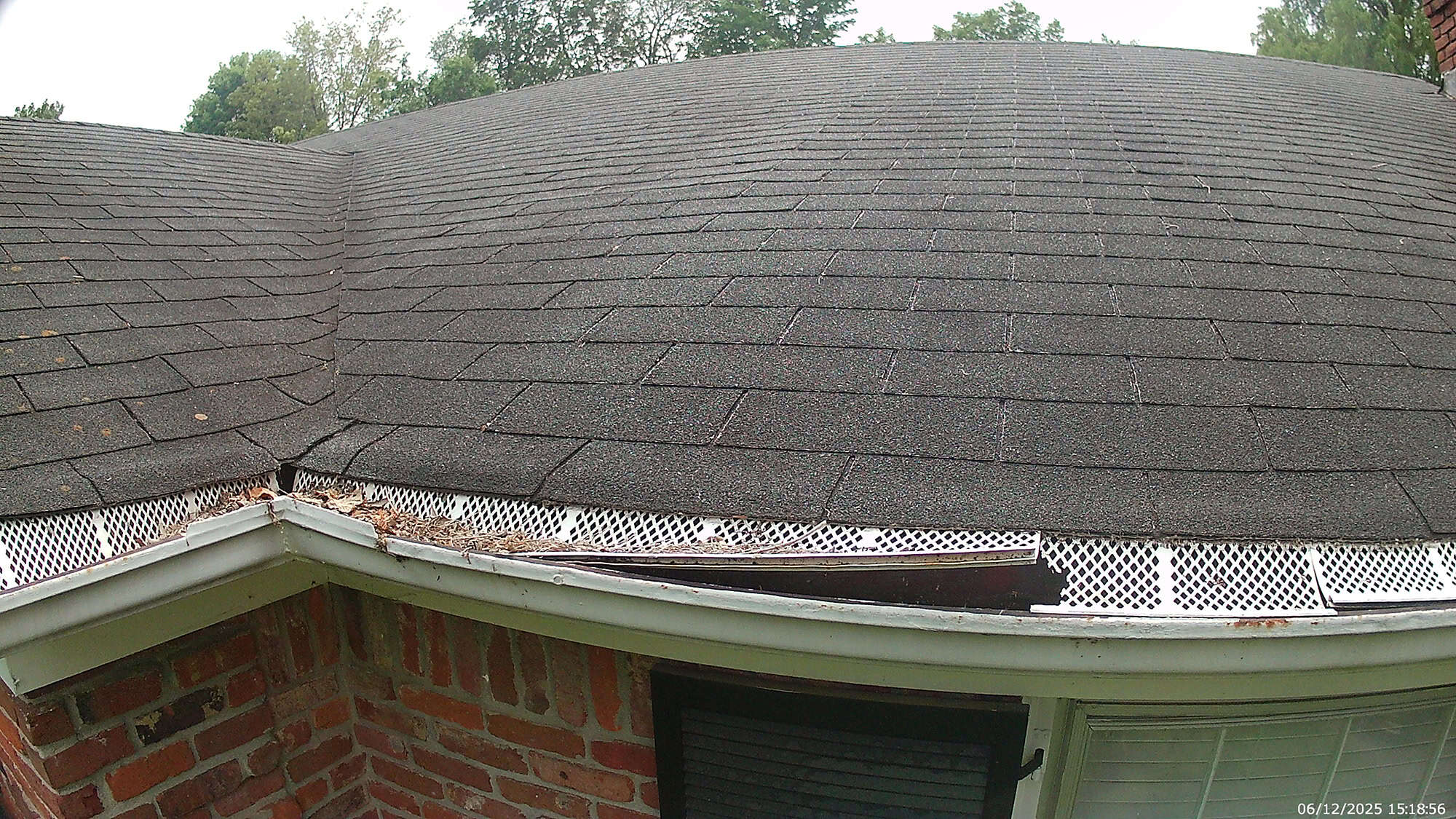
When homeowners invest in gutter screens or filters, they expect protection—especially during harsh weather. Unfortunately, winter storms reveal a hard truth: screens and filters often make gutter problems worse, not better. Snow, ice, and freezing temperatures expose design flaws that can lead to serious and costly damage.
The Hidden Problem with Screens & Filters
Screens and filter-style gutter covers are designed to block debris, but winter weather turns them into barriers that trap snow and ice exactly where water needs to flow.
Here’s what actually happens during a winter storm:
- Snow and ice sit on top of the screen, sealing the gutter system and preventing proper drainage.
- As temperatures fluctuate, melting snow has nowhere to go, forcing water to back up instead of flowing safely away.
- This trapped water often pushes under shingles, into fascia boards, soffits, and walls, where damage isn’t immediately visible.
- Over time, homeowners face wood rot, interior leaks, mold growth, peeling paint, and structural repairs—all from a system that was supposed to protect their home.
Ironically, many winter ice dams start not because of roof issues—but because gutters can’t drain properly due to screens or filters.
Why Winter Makes It Worse

Cold weather is unforgiving because it exposes weaknesses that stay hidden the rest of the year. Screens and filter-style gutter systems depend on surface tension and narrow openings to move water across and into the gutter. In dry or mild conditions, that physics works just well enough to appear effective. Winter changes everything. Snow adds weight, ice alters flow, and freezing temperatures eliminate the very surface tension these systems rely on.
As snow settles on top of screens or filters, it compresses and freezes, sealing off those small openings entirely. When daytime temperatures rise—even slightly—snow begins to melt, but the water has nowhere to go. Instead of flowing through the gutter and away from the home, meltwater backs up against shingles, fascia, and roof edges. Once refrozen, this cycle repeats, building thicker ice layers and increasing pressure on vulnerable areas of the home.
At that point, the gutter system stops functioning as drainage and becomes a solid barrier. Water is forced to take the path of least resistance—often under roofing materials, behind siding, or into wall cavities. This is how ice dams form, how hidden wood rot begins, and how interior leaks show up weeks or months later. Winter doesn’t just test gutter systems—it exposes whether they were truly engineered to manage water in all conditions or only designed to work when the weather cooperates.
The Ever Clean Difference
Ever Clean Gutters are engineered differently—because winter demands more than a screen. Our patented, maintenance-free design allows water to flow freely without trapping debris, snow, or ice on top of the system. Instead of blocking water, Ever Clean manages it—year-round.
What makes Ever Clean ideal for winter storms:
- No screens or filters to ice over
- No clogs, no surface tension failure
- Water sheds properly even during freeze-thaw cycles
- Protects roofs, siding, foundations, and basements
- Proven performance in harsh winter climates
Ever Clean Gutters don’t fight winter—it’s built for to protect your home against it.
The Real Cost of “Good Enough”
Many homeowners don’t realize the damage until stains appear on ceilings or trim begins to rot. By then, the repair costs far exceed the price of installing the right gutter system from the start. Winter storms don’t cause gutter failures—poor gutter design does. If your gutters rely on screens or filters, winter storms are a gamble you don’t need to take. Protection shouldn’t disappear when conditions get tough.
Ditch the screens. Upgrade to Ever Clean Gutters before the next storm hits. Your home will thank you—this winter and every season after. The Ever Clean Difference Our patented design eliminates clogs without trapping snow or ice. It’s engineered for year‑round protection, especially during storms.